
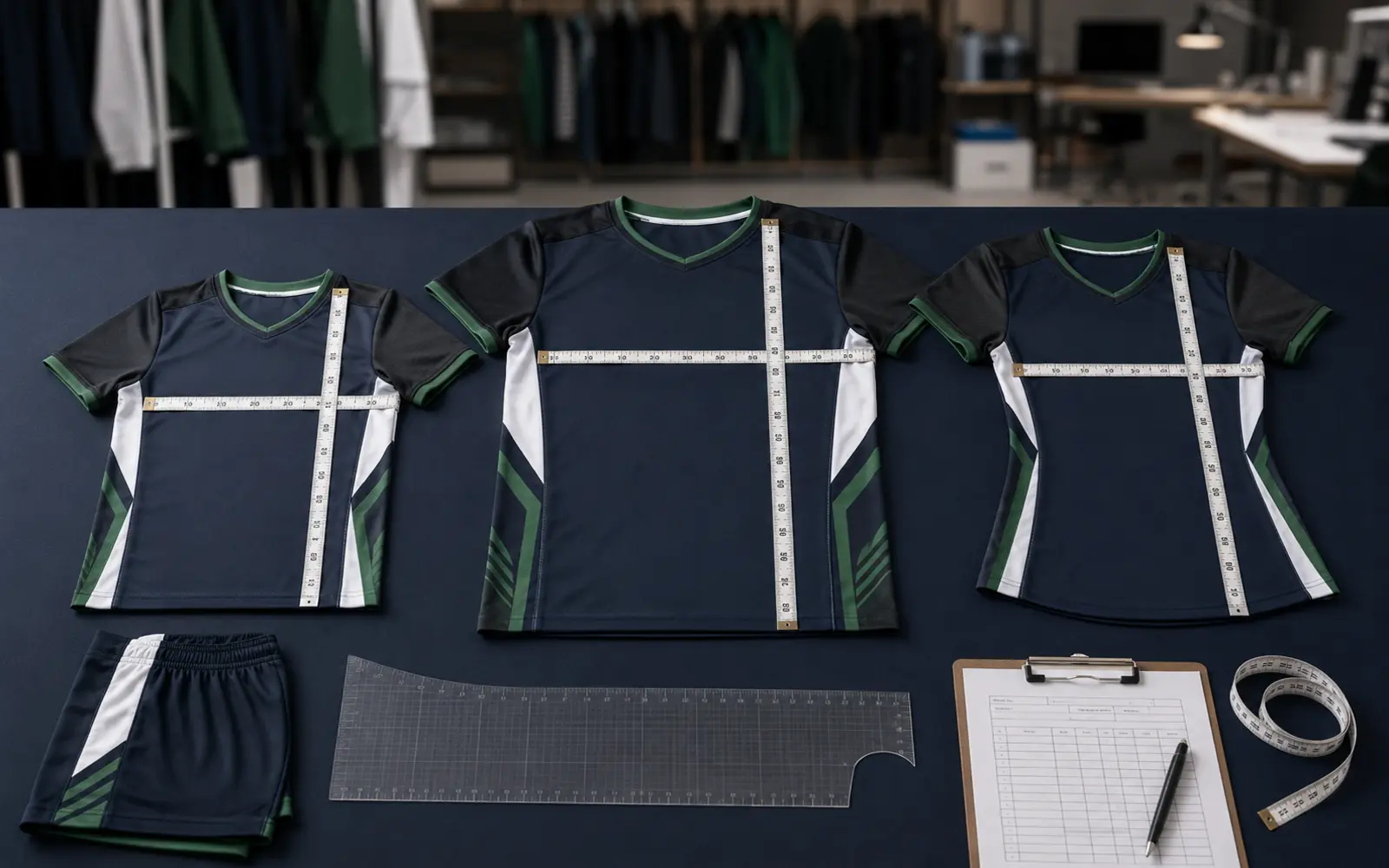
Correct jersey sizing depends on more than assigning familiar letters such as S, M and L. Teams and brands need a defined measurement chart, fit intention and organised roster process.
Choose the fit category
Decide whether the garment should be compression, athletic, regular or relaxed. A soccer jersey may need close movement-friendly shaping, while an ice hockey jersey requires room for protective equipment. Youth, adult and women-specific blocks should not be created by simply scaling one pattern.
Use garment measurements
Provide or approve measurements such as chest width, body length, shoulder width, sleeve length, waist, hip and outseam. State where each measurement is taken. Garment measurements are different from body measurements, so label the chart clearly.
Consider fabric stretch
Stretch percentage and recovery affect fit. A compression garment may measure smaller than the body because negative ease is intentional. A non-stretch woven short requires enough ease for movement. Fabric changes can therefore require fit confirmation even when the size chart remains the same.
Test representative sizes
Fit the base sample on an appropriate wearer and test movement. For large programmes, review at least one smaller and one larger graded size before final approval. Check armholes, neck opening, rise, waist security and length during the sport.
Collect the roster accurately
Use a spreadsheet with player name, jersey name, number, top size, bottom size and any special notes. Lock spelling and number data before production. Late roster changes can disrupt printing and packing.
Approve tolerances
Garments have reasonable manufacturing tolerances. Agree how measurements will be checked and which dimensions are critical to performance.
Browse custom team uniform programmes or submit your size chart with a quote request.