
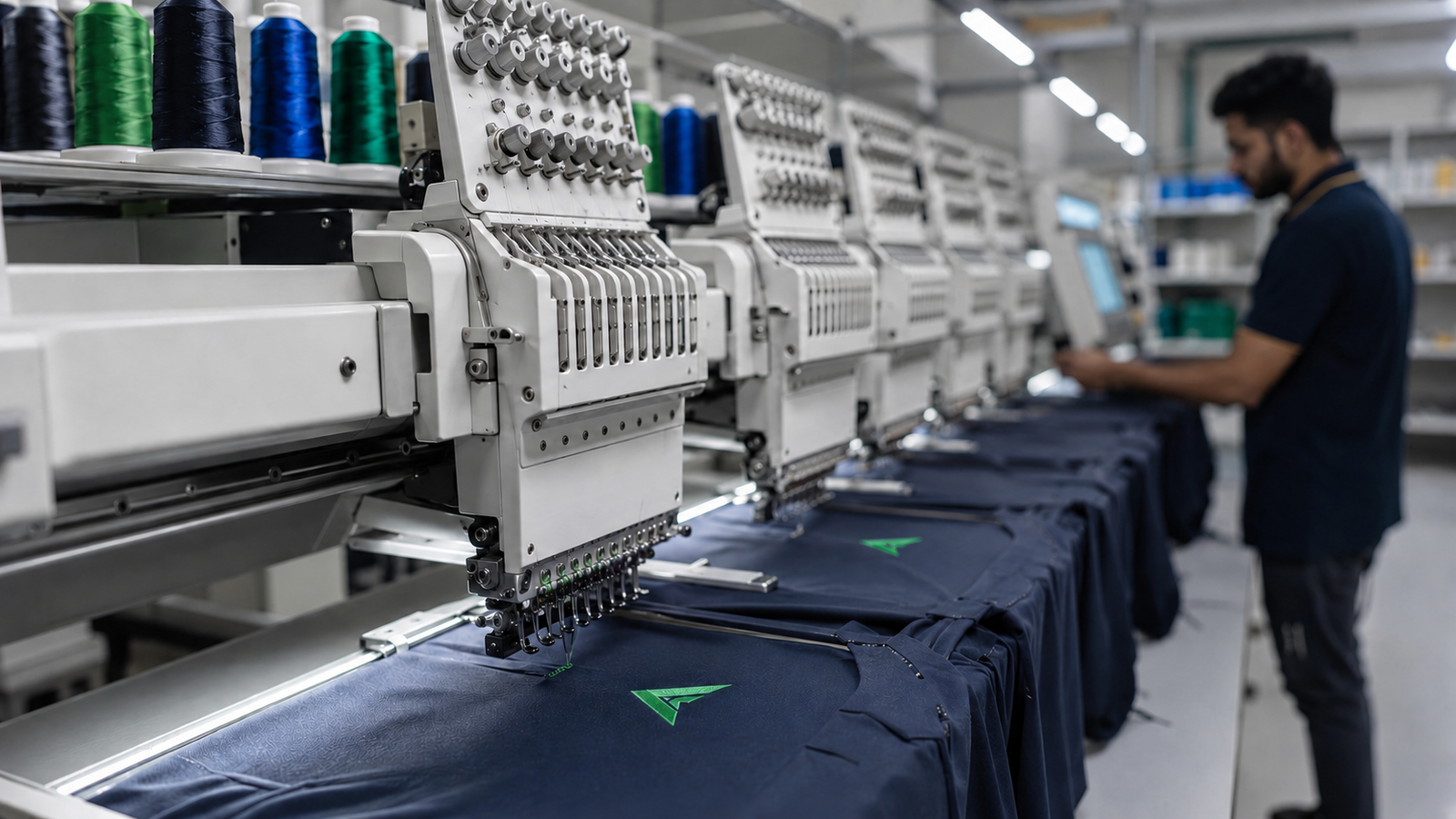
Embroidery and tackle twill both create dimensional decoration, but they use different materials and construction. Understanding the difference helps teams choose an appropriate finish for jerseys, jackets and presentation apparel.
How embroidery works
Embroidery forms the design directly with thread stitches. It is effective for crests, small chest logos, initials and detailed brand marks. Stitch count, thread colour, backing and garment fabric affect cost and performance. Large dense areas can add weight and stiffness.
How tackle twill works
Tackle twill uses cut fabric shapes that are positioned and stitched onto the garment. It is widely associated with team names, large numbers and collegiate styling. Single-layer and multi-layer constructions can create outlines, shadows and colour depth.
Appearance and scale
Embroidery handles smaller detailed emblems well. Tackle twill is particularly effective for large bold letters and numbers where a fabric surface and stitched edge are desired. Chenille or embroidered elements may also be combined with twill on varsity garments.
Garment compatibility
Jersey fabric must support the decoration without excessive distortion. Backing and stitch settings should suit the weight and stretch of the garment. Tackle twill is common on baseball, American football, ice hockey and varsity styles, while embroidery is used across polos, tracksuits, jackets and caps.
Care and durability
Both methods can be durable when materials, stitching and application are correct. Buyers should approve colours, dimensions, placement and edge finish on a sample. Washing instructions must reflect the complete garment and decoration system.
Costing information
Provide vector artwork, finished dimensions, colour count, garment quantity and preferred construction. A manufacturer can then calculate stitch count or twill layers and recommend a practical route.
Explore custom team uniforms and the Airek Sports decoration capabilities.