
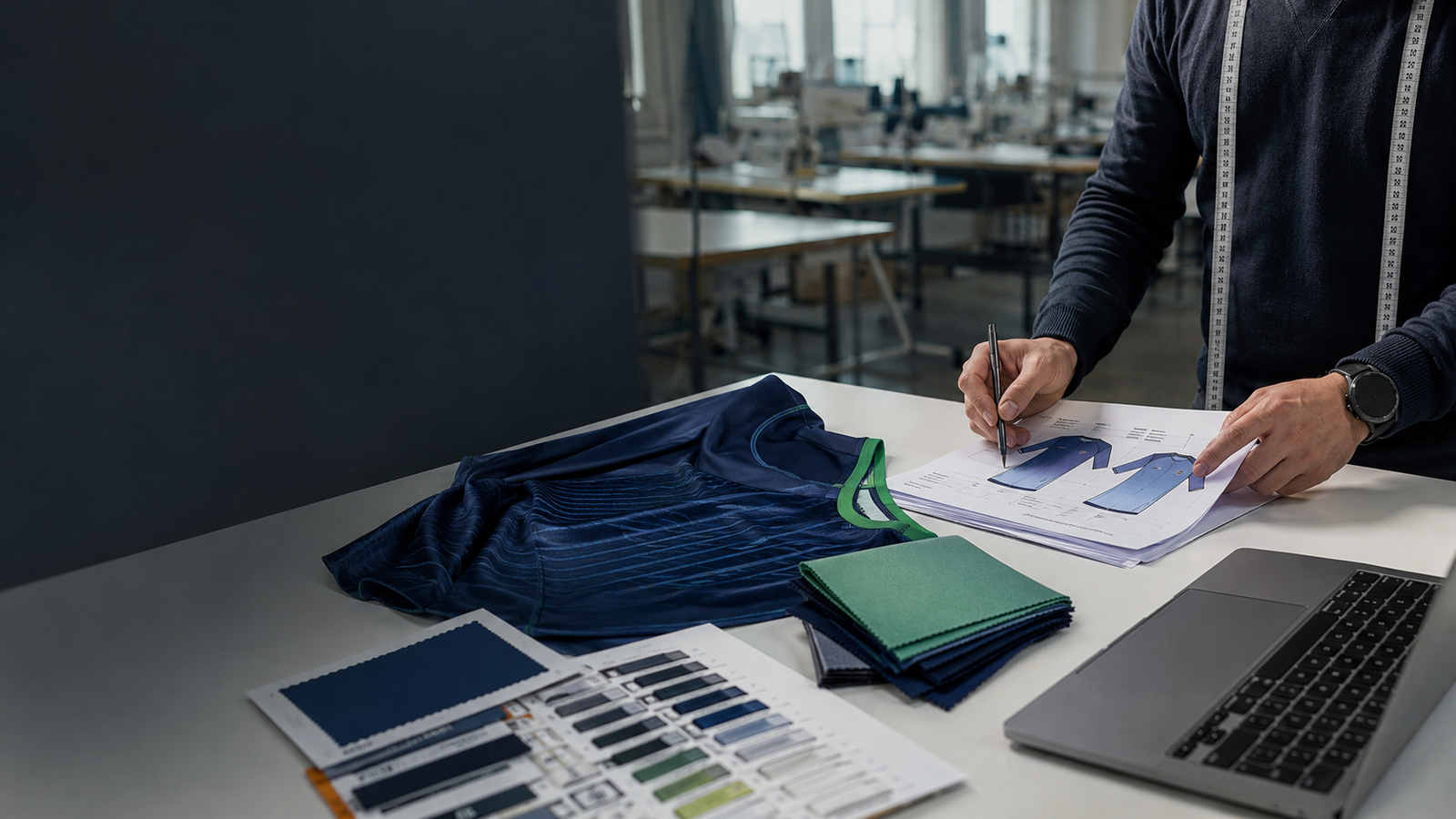
A sample turns a concept into a physical garment that a buyer can inspect before committing to bulk production. It is not only a miniature order. It is the stage where fabric, measurements, construction, decoration and branding decisions are tested together.
Start with a complete brief
The first sample becomes more useful when the manufacturer receives a tech pack, reference garment or organised design brief. Include size measurements, fabric direction, colour references, logo files, placement dimensions, labels and packaging expectations. Also explain the intended customer and activity.
Types of samples
A development sample evaluates the overall concept and construction. A fit sample focuses on measurements, balance and movement. A print or embroidery strike-off confirms colour, scale and technique before it is placed on the final garment. A pre-production sample represents the approved standard for bulk manufacturing.
What buyers should review
Check measurements against the size chart, seam construction, stretch and recovery, garment balance, artwork colour, logo position, label information and finishing. Test the garment in the activity for which it was designed. Record feedback clearly instead of relying only on informal messages.
Manage revisions carefully
Combine feedback into one revision document with photographs and measurements. Mark each change as approved, revised or still pending. Changing fabric, artwork and fit at different times can create unnecessary sample rounds, so decisions should be coordinated.
Approve the production standard
Bulk production should begin only after the important sample details are accepted. Keep an approved sample or complete specification record for quality checks and future reorders.
See the full concept-to-delivery workflow and use the quote form to start a sample request.