
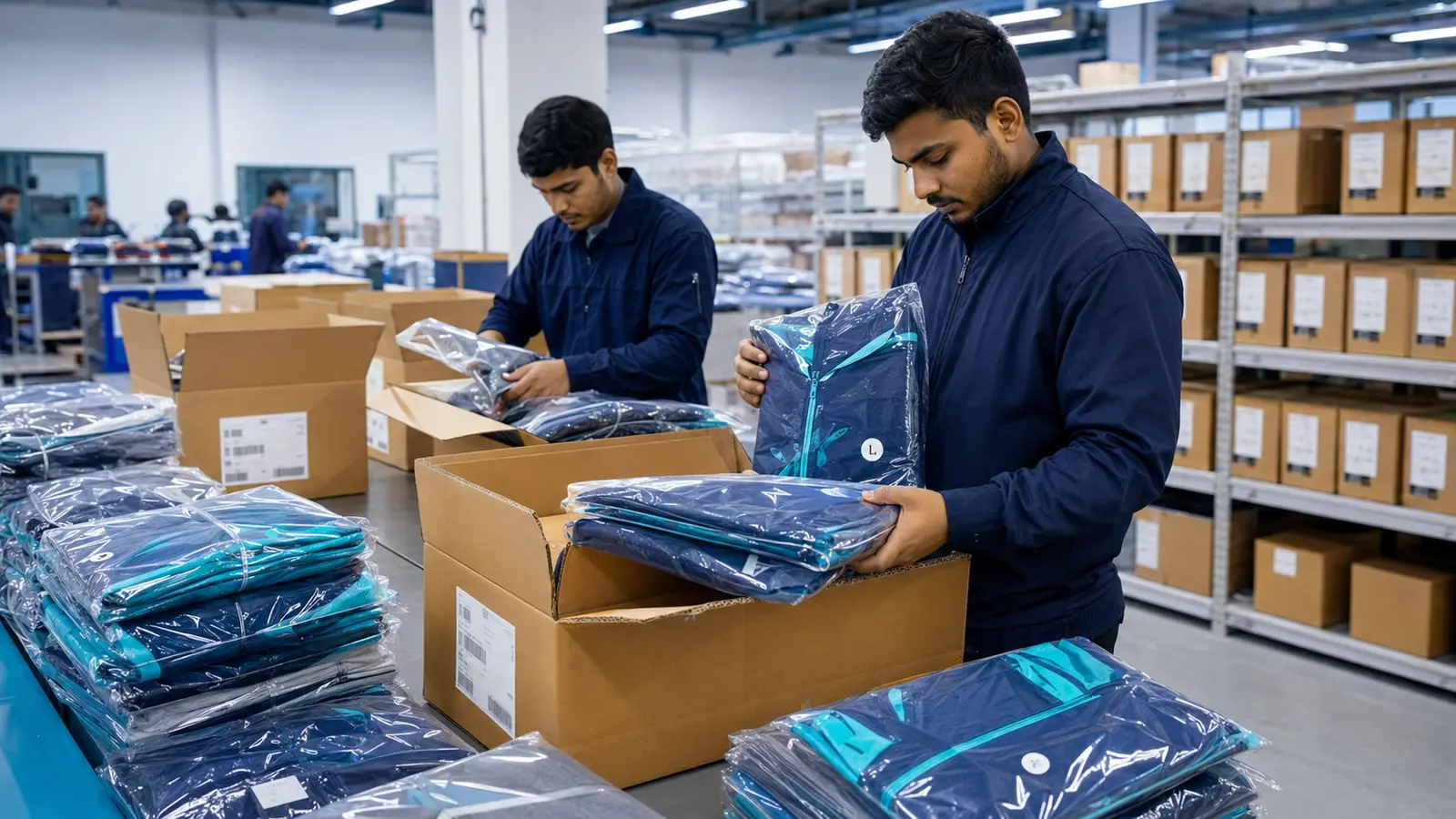
Pakistan has a well-established textile and sports-goods manufacturing base, and Sialkot is known internationally for specialised sports products. Successful importing still depends on clear specifications, documented approvals and realistic logistics planning.
Evaluate the manufacturing fit
Confirm that the supplier regularly produces your product category and decoration method. Review real process evidence, sample quality, communication, production controls and the ability to follow a written specification.
Request a detailed quotation
A useful quotation should identify product, quantity, fabric, decoration, labels, packaging, sample terms, production timing and delivery basis. Clarify whether shipping, duties and taxes are included. Currency and payment milestones should be agreed in writing.
Approve samples and records
Inspect fit, construction, colours, logos and branding. Keep the approved sample, measurement chart and artwork references. Bulk production should follow this agreed standard.
Understand shipping terms
Samples and smaller orders commonly move by international courier. Larger orders may use air cargo or sea freight depending on urgency and volume. Confirm the Incoterm, destination, consignee information, carton plan and who is responsible for clearance.
Prepare import information
Buyers should check product classification, labelling, fibre-content rules, country-of-origin requirements, duties and local compliance obligations in the destination market. Requirements vary, so use a qualified customs broker where needed.
Plan time beyond production
Allow time for sample shipping, feedback, bulk production, quality inspection, export handoff and customs clearance. A delivery date is stronger when each stage is documented.
Read about Airek Sports in Sialkot, review the manufacturing workflow, or contact the team.